
Taking the big decision of seeking help for an OUD (Opioid Use Disorder) is deemed a profound and highly-courageous step. If you or your loved one are exploring options of MAT (Medication-Assisted Treatment), you might have come across Sublocade – an every-month injection that has significantly transformed the landscape of recovery. For numerous patients, transitioning from everyday medications to a fixed monthly schedule brings a very renewed sense of freedom, minimizing the daily anxiety that comes with managing doses.
However, a very common query our clinical team gets asked is: “Precisely how long does Sublocade last?”
The most straightforward answer is twofold: A single injection of Sublocade actively handles cravings as well as withdrawal symptoms for around 28-30 days. This is precisely why it gets administered on a month-wise schedule. However, due to its unique design of extended-release, buprenorphine (Sublocade’s active ingredient) remains within your system for 2-5 months – and in some cases, up to 12 months – post your final dosage.
In our detailed guide, we will take a look at the science that is behind Sublocade, explain the timeline of treatment, and discuss how its steady release supports prolonged recovery without needing inpatient hospitalization.
The Science Behind Sublocade: How the Monthly Injection Functions
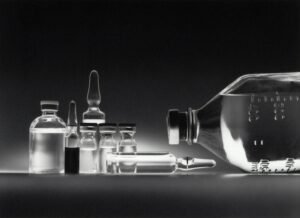
In order to properly explain why Sublocade lasts for the period it does, it is helpful to understand the way in which it interacts with the body.
Sublocade is made up of buprenorphine, which is a partial mu-receptor agonist. In simple words, this means that the medication attaches itself to the brain’s opioid receptors, the same ones that drugs such as heroin, fentanyl, or prescription narcotics choose to bind to. However, since it is merely a partial agonist, it fully reduces the physical dependence of the brain – effectively silencing instant cravings in addition to preventing withdrawal – without leading to a dangerous euphoric effect or “high”.
As opposed to daily oral medications such as Suboxone, Sublocade gets administered through a subcutaneous injection, i.e., it gets injected just under the layer of skin, usually on the abdomen, by an officially-licensed healthcare provider.
Post getting injected, the medication transforms itself into a solidified mass, or “depot”. Over the course of the upcoming month, the depot steadily breaks down, releasing a very steady, consistent supply of buprenorphine into the bloodstream. This actively eliminates everyday peaks and valleys in the levels of medication, thereby keeping the patient stabilized physically so they can emphasize on their behavioral counseling, work, as well as family life.
The Active Window of Treatment: 28-30 Days
For the purposes of active treatment, a single Sublocade injection usually lasts for approx. 1 month.
As per the prescribing guidelines, at least 28 days need to elapse between dosages. The medication is particularly calibrated so that as the last month’s injections commences to reach its lowest level of effectiveness, the upcoming scheduled injection restores it. The overlapping procedure makes sure that there is zero gap in terms of therapeutic coverage.
By removing the requirement for everyday dosing, patients get freed from the continuous reminder regarding their diagnosis. As opposed to waking up and instantly having to handle medication, individuals can simply live their respective lives, periodically checking in with their physicians of addiction medicine as well as counselors (once a month) for receiving their injection as well as comprehensive care review.
System Retention: How Long Does Sublocade Remain In Your Body?

While the clinical effects are specifically designed around a monthwise schedule, the physical presence of the drug in their body narrates a different story. A medication’s “half-life” refers to the total time taken for the body to fully eliminate precisely half of the active drug.
- Sublocade’s Half-Life: A Sublocade injection’s terminal half-life is very long – generally between 43 days to 60 days.
- Total Elimination Time: Usually, it takes around 4-5 half-lives for any drug to get fully-eliminated. As an outcome, buprenorphine from Sublocade can be detectable within your system for 172-300 days (roughly 5-10 months).
For patients who have been on Sublocade’s maintenance dose for 4-6 months, the medication’s traces can exhibit itself in specialized blood as well as urine test for a period of up to 1 year (12 months) post the final injection.
Why the Slow Taper is an Advantage, Not a Drawback
When patients hear that a specific medication remains in their system for up to 12 months, it can sometimes lead to concerns. However, in OUD’s context, this extended timeline is very beneficial.
When a patient and their respective medical provider eventually decide that the time for concluding the Sublocade treatment has come, the left-out deport under the skin gives the automatic, natural taper. As opposed to instant cliff drop in terms of medical levels – which usually triggers intense withdrawal – the buprenorphine in a very slow manner fades from the patient’s bloodstream in a few months. This incredibly steady decline permits the receptors of the brain to heal as well as adjust at a very manageable pace, leading to significant lower risks of experiencing physical symptoms of withdrawal or relapse.
Variables That Impact How Long Sublocade Lasts
It is vital to keep in mind that human biology varies. The precise timeline for how long Sublocade stays within your system depends on the numerous individual factors:
- Treatment’s Duration: The longer you get monthly injections, the more the medication accumulates within the tissues of your body. A patient who gets 2 injections will clear the medication much faster as compared to someone who has been on Sublocade for 2 years.
- Metabolism & Body Composition: Since the medication creates a depot in the subcutaneous tissue (fat), individuals having a higher percentage of body fat or slower metabolisms might retain the medication a tad bit longer.
- Liver Function: Buprenorphine gets primarily processed by the liver. Patients having underlying liver-associated conditions might metabolize the drug at a very slow rate.
- Dosage Size: Typical inductions begin with 300 mg doses prior to stepping down to 100 mg doses of maintenance. Patients who need consistent 300 mg maintenance doses will retain elevated levels of the medication for enhanced periods.
The First Months vs. Long-Term Maintenance
Beginning Suboxone generally involves a very structured initial phase. Since Sublocade is so long-acting, patients generally need to tolerate a transmucosal (inside the cheek or under the tongue) product of buprenorphine for a minimum of 7 days prior to getting their first injection. This makes sure that the body responds very safely to buprenorphine.
Post clearance, the standard timeline looks like the following:
- 1st Month: Initial 300 mg injection in order to build baseline levels of medication.
- 2nd Month: Second 300 mg injection in order to reinforce stability.
- Month 3 & Beyond (Maintenance): Generally reduced to a 100 mg injection (monthly), though certain clinical adjustments get made as per the individual cravings of the patient and symptom control.
There exists no arbitrary “maximum” duration when it comes to Sublocade treatment. Since OUD is deemed a chronic condition, certain patients stay on Sublocade for numerous months in order to build coping skills, while others remain on it indefinitely in order to ensure lifelong stability. The timeline always gets dictated by what keeps the patients safe, healthy, as well as thriving.
Take the Next Step Towards Your Recovery With AllianceMD
If either you or a loved one is seriously struggling with substance use, you do not need to put your entire life on hold in order to get top-notch medical help. AllianceMD offers evidence-backed, stigma-free outpatient recovery care that is designed to fit perfectly into your real life.
Ready to commence a brand new chapter? Reach out to us today to get started!
Frequently Asked Questions (FAQs)
Q. Does Sublocade present itself on a standard drug test?
A. Typical pre-employment drug panels generally look for illicit opioids such as heroin, but they do not routinely check for buprenorphine. However, if a specific employer or physician orders a specialized Medication-Assisted Treatment (MAT) or buprenorphine-specific drug screen, Sublocade will exhibit itself as positive for numerous months (and up to 1 year) post your last injection.
Q. What happens If I accidentally miss my scheduled Sublocade injection?
A. While you are advised to strive in order to keep your monthly appointments, the long-lasting nature of Sublocade offers an in-built safety net. Delays of up to 2 weeks (administering the injection of up to 44 days post the previous one) are usually not expected to lead to withdrawal symptoms. If you miss one appointment, get in touch with your provider instantly to reschedule as soon as possible.
Q. Is Sublocade the same thing as Suboxone?
A. No. While both the medications utilize buprenorphine in order to treat OUD, they are formulated in a different manner. Suboxone is taken everyday as an oral film/tablet and consists of naloxone as a misuse deterrent. Sublocade gets administered as a once-a-month injection by a medical professional, offers a slow, continued release, and does not constitute naloxone.